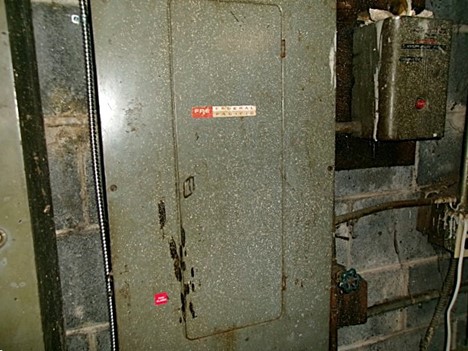
 Why is it important to identify potentially hazardous electric circuit breakers and panels during a loss control inspection?
June 26, 2026
by Nils Deacon, Manager, Inspections and Rating Services
An important part of any loss control inspection, either for a commercial or residential building, is the electrical distribution system.
The electrical panel is the main distribution point for power entering a building. It distributes power by splitting the main electricity supply into smaller, separate circuits for different rooms. It provides a single, safe place to manually turn off electricity to the whole building or specific areas during emergencies or repairs.
Circuit breakers are automatic safety switches installed inside the electrical panel. They monitor the flow of electricity through each circuit. If too much power is drawn (an overload), or if wires cross (a short circuit), the breaker instantly trips and cuts off the electricity. This stops wires from overheating and catching fire.
Millions of homes and commercial buildings built in the 1960s to1980s were equipped with various electrical distribution equipment.
In 2005, a class action lawsuit in New Jersey found that a distribution panel manufacturer was guilty of violating the New Jersey Consumer Fraud Act by cheating during testing of circuit breakers to obtain Underwriters Laboratories (UL) approval. American Society of Home Inspectors (ASHI)
https://www.homeinspector.org/reporter-articles/new-jersey-finds-federal-pacific-fpe-guilty-of-consumer-fraud/
The National Electric Code (NEC) requires “the conductors and equipment required or permitted by this Code shall be acceptable only if approved.” NFPA
UL is one of the primary organizations able to approve various equipment noted in the code. Lack of approval could be perceived as not aligned with the NEC.
Failure of a circuit breaker to properly trip can lead to a fire. Panels associated with the lawsuit were found to be present at various fires.
If an MSO loss control inspection encounters these panels, a recommendation is made to have them inspected by a qualified electrician to determine if there are any safety issues.
DISCLAIMER: This information reflects the interpretation of MSO, Inc. with regard to NFPA Standards and Codes and other code sources. It does not represent these codes’ official position on the items discussed.
Approximately 50- to 60-year-0ld commercial panel