 What standards govern installation and equipment for charging EVs – electric vehicles?
May 11, 2026
by Nils Deacon, Manager, Inspections and Rating Services
EV charging is an important issue to underwriters. MSO’s Underwriters’ Corner will address this subject as a series.
There are many standards that govern and provide guidance on this subject. For UC purposes, the following will be referenced and explained.
NFPA 70 The National Electric Code NEC / NFPA provides guidance and framework for Electric Vehicle Power Transfer Systems, specifically Article 625. This includes updates done in 2023 to the code.
Other important standards are for equipment and testing:
• UL 2594 which governs safety of AC charging equipment (Level 1 and Level 2).
• UL 2202, the primary safety standard for DC fast charging equipment.
• IEC 61851-1, the international standard for general safety and testing of conductive charging systems.
For building type and specific use, the following codes / standard are utilized:
• International Building Code (IBC), in which Sections 406.2.7 and 1107 specify the required number of EV-ready parking spaces in new commercial buildings.
• NFPA 88A which specifically addresses fire safety standards for EV charging within parking structures.
These are some of the principal standards that are directly used. Other codes and standards will also provide guidance on this topic going forward.
Fire risk of charging EVs is very low, as noted in the previous UC. Losses that occur are often related to improper charger installation or previous vehicle-battery damage. Cited codes are in place to deal with these circumstances and others, and will be used as guidance for insurers in upcoming UC articles.
DISCLAIMER: This information reflects the interpretation of MSO, Inc. with regard to NFPA Standards and Codes and other code sources. It does not represent these codes’ official position on the items discussed.
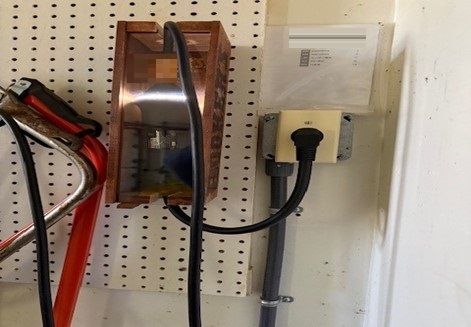
EV charger installed in a residence